First Coast EKG:
How to Become an EKG Technician in Florida
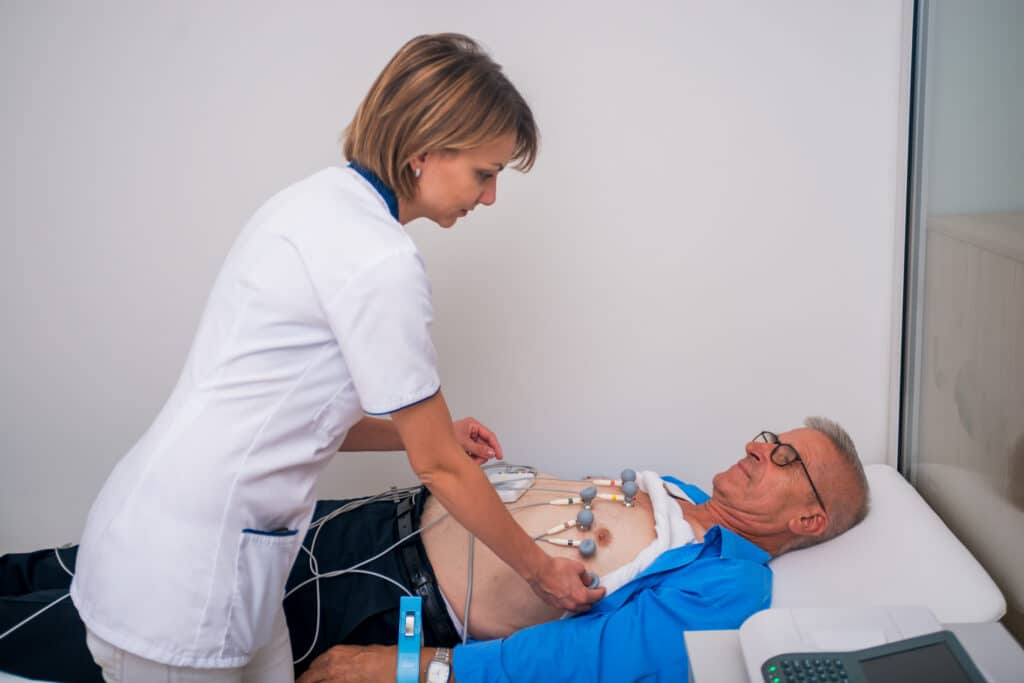
Becoming an EKG Technician can be a practical way to begin a healthcare career focused on cardiac testing, patient care, and the collection of accurate electrocardiogram tracings.
In Florida, EKG Technicians can enter the field through training designed to develop both the technical knowledge and hands-on skills needed to perform electrocardiograms safely and accurately. Employers may establish their own education, experience, and national certification requirements, so choosing the right training pathway is an important first step.
This guide explains how to become an EKG Technician in Florida—from completing training and hands-on EKG experience to national certification and beginning your career.
Step 1: Understand the Requirements to Become an EKG Technician in Florida
Florida does not list EKG Technician as a separately licensed healthcare profession through the Florida Department of Health’s regulated-professions system. However, employers may establish their own requirements for education, training, experience, certification, CPR/BLS, or other qualifications. Florida Department of Health
The U.S. Bureau of Labor Statistics notes that EKG Technicians may qualify for entry-level positions with a high school diploma or equivalent and that EKG certificate programs are generally completed in less than one year. Employers may also prefer or require professional certification. Bureau of Labor Statistics
It is important to understand the difference between:
EKG Technician Training
A training program teaches the knowledge and practical skills needed to prepare patients, place electrodes correctly, operate EKG equipment, obtain accurate tracings, identify artifacts, and perform other entry-level EKG Technician responsibilities.
Certificate of Completion
A certificate of completion is provided by a training school after a student successfully completes its program.
It shows that the student completed the school’s curriculum.
A certificate of completion is not the same as national certification.
National Certification
National certification is a professional credential earned after meeting the requirements of a certification organization and passing its examination.
Examples available to eligible First Coast graduates include:
•NHA Certified EKG Technician (CET)
•MedCA EKG Technician (EKG1)
For a detailed explanation of Florida requirements, see Do You Need an EKG License or Certification in Florida?
Step 2: Complete an EKG Technician Training Program
A strong EKG Technician program should teach more than simply how to connect a patient to an EKG machine.
Students should learn how the heart’s electrical system works, how to prepare a patient correctly, how electrode placement affects the tracing, how to recognize and correct artifacts, and how to obtain an accurate 12-lead EKG.
Training commonly includes:
- Professional patient communication
- Basic anatomy and physiology of the heart
- Cardiac electrical conduction
- EKG terminology
- Patient identification and preparation
- Infection prevention and standard precautions
- Proper electrode placement
- Performing a 12-lead EKG
- EKG leads and views of the heart
- Obtaining clear and accurate tracings
- Recognizing and correcting common artifacts
- EKG equipment operation
- Troubleshooting common tracing problems
- Measuring heart rate
- Basic rhythm recognition
- Recognizing normal and abnormal EKG characteristics
- Identifying findings that should be reported
- Patient safety
- Documentation
- Preparation for national certification
First Coast EKG Technician Training
First Coast Training Center offers a 100-hour EKG Technician program in Jacksonville combining classroom instruction, hands-on EKG practice, and experience performing EKGs on live individuals.
The program is designed to prepare students for entry-level EKG Technician work while developing the practical experience needed for national certification readiness.
Step 3: Complete Hands-On EKG Experience
EKG is a technical, hands-on skill.
Students need opportunities to practice patient preparation, electrode placement, equipment operation, tracing acquisition, and troubleshooting—not simply learn the concepts from a textbook.
Hands-on experience is particularly important for students planning to pursue national certification.
For NHA’s Certified EKG Technician certification, candidates must provide evidence that they have successfully performed a minimum of:
10 EKGs on Live Individuals
NHA specifically includes this hands-on requirement in its CET eligibility pathway. Candidates qualifying through either training or relevant work experience must document at least 10 EKGs performed on live individuals. AscendBase
First Coast’s 100-hour EKG Technician program incorporates 10+ EKGs on live individuals into the hands-on training experience.
Why This Matters When Comparing EKG Programs
EKG training programs can vary significantly in length, format, and the amount of hands-on experience they provide.
When comparing programs, do not look only at how quickly the course can be completed.
Ask whether the program includes:
- Supervised hands-on EKG practice
- Correct electrode-placement technique
- Experience performing 12-lead EKGs
- EKGs performed on live individuals
- Artifact recognition and correction
- EKG equipment troubleshooting
- Patient preparation and safety
- Preparation for national certification requirements
A program may teach useful EKG concepts without necessarily providing the hands-on experience required for the certification pathway a student plans to pursue.
Step 4: Choose a National EKG Certification
National certification is different from completing an EKG training program.
Certification demonstrates that a candidate has met the eligibility requirements established by a credentialing organization and successfully passed its examination.
First Coast Training Center prepares eligible graduates for two national certification options.
NHA Certified EKG Technician — CET
The National Healthcareer Association offers the Certified EKG Technician (CET) credential.
Candidates using NHA’s training pathway must have completed an eligible EKG Technician training or education program and provide evidence of at least 10 EKGs performed on live individuals
MedCA EKG Technician Certification — EKG1
Medical Career Assessments offers national certification for EKG Technicians (EKG1).
MedCA’s published eligibility requirements allow candidates to qualify through successful completion of an approved training program or through qualifying work experience. Medca Inc.
For First Coast students, the MedCA pathway also incorporates the hands-on EKG requirements established through our approved testing-school relationship.
Different employers may have different certification preferences.
Step 5: Take Your National Certification Exam
After completing training and meeting the eligibility requirements for the certification pathway you choose, the next step is to register for and take the national certification examination.
Train Here. Graduate Here. Test Here.
First Coast Training Center is an NHA and MedCA testing site, allowing eligible graduates to continue from training to certification testing at the same school.
Students can:
Complete Their Training
Finish the First Coast EKG Technician program and complete the required classroom instruction and hands-on practice.
Complete Their Live EKG Requirements
Successfully perform at least 10 EKGs on live individuals during supervised training.
Prepare for Certification
Review the knowledge, procedures, safety practices, and EKG concepts expected on the national certification examination.
Take Their Certification Exam Here
Eligible graduates can complete their NHA or MedCA certification examination at First Coast Training Center.
Step 6: Begin Applying for EKG Technician Jobs
After completing training and any national certification you choose to pursue, you can begin applying for entry-level EKG Technician positions.
EKG Technicians work in a variety of healthcare settings, including:
- Hospitals
- Physicians’ offices
- Cardiology practices
- Outpatient care centers
- Medical and diagnostic facilities
- Clinics
- Emergency departments
- Other settings where cardiac testing is performed
The Bureau of Labor Statistics groups EKG Technicians within cardiovascular technologists and technicians. Hospitals are the largest employer in that broader occupation, followed by physicians’ offices, with additional employment in outpatient care centers and medical and diagnostic laboratories. Bureau of Labor Statistics
EKG-related work may involve more than simply obtaining a tracing. Technicians must communicate clearly with patients, follow precise procedures, operate technical equipment, obtain useful diagnostic recordings, and communicate appropriate information to other members of the healthcare team.
Step 7: Continue Building Your Healthcare Career
EKG training can provide a focused entry-level healthcare skill or complement other clinical education and experience.
Students may combine EKG skills with training or experience in areas such as:
- Nursing Assistant
- Phlebotomy
- Medical Assisting
- Patient Care
- Cardiac monitoring
- Other allied-health occupations
First Coast Training Center also offers CNA, Phlebotomy, CPR, and other healthcare training programs for students interested in continuing to build their skills.
Which EKG Path Is Right for You?
100-Hour EKG Technician Program
•Best for students who want comprehensive training that includes classroom instruction, hands-on EKG practice, EKGs on live individuals, and preparation for national certification.
National Certification
•Best for students who want to understand NHA and MedCA certification requirements, exam options, and testing at First Coast Training Center.
Ready to Start Training?
If you have already decided that EKG Technician training is right for you, view upcoming English and Spanish classes and current availability.
Frequently Asked Questions About Becoming an EKG Technician in Florida
Do I need a license to work as an EKG Technician in Florida?
Florida does not list EKG Technician as a separately licensed profession through the Florida Department of Health’s regulated healthcare professions. Employers may still establish their own education, training, experience, certification, or other hiring requirements.
Do I need national certification to work as an EKG Technician in Florida?
National certification is separate from state occupational licensure.
Employers may prefer or require professional certification as part of their hiring standards. The Bureau of Labor Statistics specifically notes that employers may require or prefer professional certification for cardiovascular technologists and technicians.
How long does it take to become an EKG Technician?
Training length varies by program.
The Bureau of Labor Statistics notes that certificate programs specifically for EKG Technicians are generally completed in less than one year.
First Coast Training Center’s EKG Technician program includes 100 hours of classroom and hands-on training.
When comparing programs, consider not only how quickly a course can be completed but also the amount of hands-on practice, live EKG experience, certification preparation, and instructor support included.
How many EKGs do I need for national certification?
For NHA Certified EKG Technician eligibility, candidates must provide evidence that they have successfully performed at least 10 EKGs on live individuals.
First Coast’s program incorporates at least 10 EKGs on live individuals into its hands-on training.
Can I become an EKG Technician without previous healthcare experience?
Yes. Previous EKG experience is not required to enter First Coast Training Center’s EKG Technician program.
Students may be entering healthcare for the first time or adding EKG skills to existing experience as a CNA, phlebotomist, medical assistant, or other healthcare worker.
Where can EKG Technicians work?
EKG Technicians may work in hospitals, physician offices, cardiology practices, outpatient care centers, clinics, medical and diagnostic facilities, and other healthcare environments where cardiac testing is performed.
Actual hiring requirements vary by employer.
Can I take my national certification exam at First Coast Training Center?
Yes. First Coast Training Center is an NHA and MedCA testing site. Eligible graduates can complete their training and take the appropriate national certification examination at First Coast Training Center.
Ready to Start Your EKG Career?
Whether you are beginning a healthcare career or adding EKG skills to your existing experience, First Coast Training Center provides comprehensive hands-on training designed to prepare students for real-world EKG procedures and national certification.
Choose the next step that’s right for you.